


























































































































































































































































































































































































































Supreme Court Fixes April 22 for Hearing of PDP Leadership Appeals


The Supreme Court of Nigeria has fixed April 22, 2026, to hear two appeals filed by a faction of the Peoples Democratic Party (PDP) led by Mr. Kabiru Turaki.
The appeals seek to overturn the Court of Appeal’s ruling that invalidated the party’s Ibadan National Convention held on November 15–16, 2025.
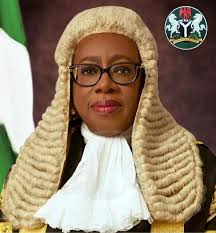
A five-member panel of the apex court, led by Justice Lawal Garba, granted the group’s application for accelerated hearing and approved a departure from standard procedures to abridge the time required for filing briefs.
In the first appeal—filed against a rival PDP faction aligned with the Minister of the Federal Capital Territory, Mr. Nyesom Wike—the court directed that hearing notices be served on the seventh respondent, Mr. Mohammed Abdulrahman, who was absent during proceedings.
Counsel to the Turaki group, Mr. Chris Uche, emphasised the urgency of the matter, citing the need to align with the timetable of the Independent National Electoral Commission (INEC) ahead of the 2027 general elections. He also submitted an affidavit of extreme urgency.
Counsel to Mr. Austin Nwachukwu and two others, Mr. Emmanuel Ukala, SAN, requested 15 days to file a response, citing the need to obtain complete records from the Court of Appeal’s decision. The Supreme Court, however, ordered all nine respondents to file their replies within five days.
In the second appeal—filed against former Jigawa State Governor, Mr. Sule Lamido, and others—the court similarly granted accelerated hearing and fixed April 22 for proceedings.
Mr. Lamido had earlier challenged his exclusion from the PDP national chairmanship race, prompting Justice Peter Lifu of the Federal High Court to issue orders halting the convention.
Lower courts have largely ruled against the Turaki-led faction, nullifying the Ibadan convention, restraining INEC from recognising its outcomes, and, in some cases, restricting access to the party’s national secretariat.
The appellants maintain that the dispute concerns internal party affairs, which they argue are non-justiciable, and insist that due process was followed.