






































































































































































































































































































































Tinubu Advocates Stronger African Economic Integration at Nairobi Summit

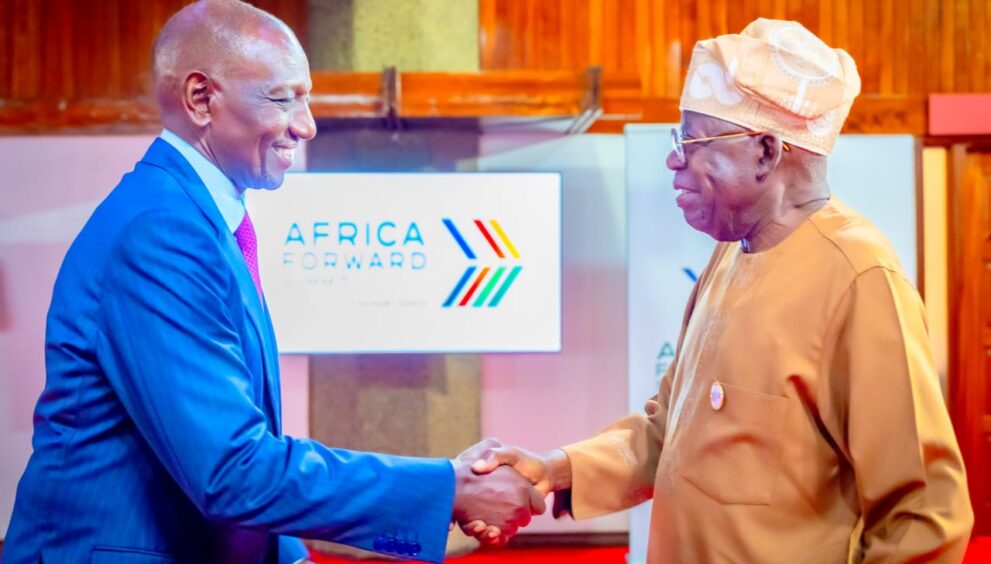
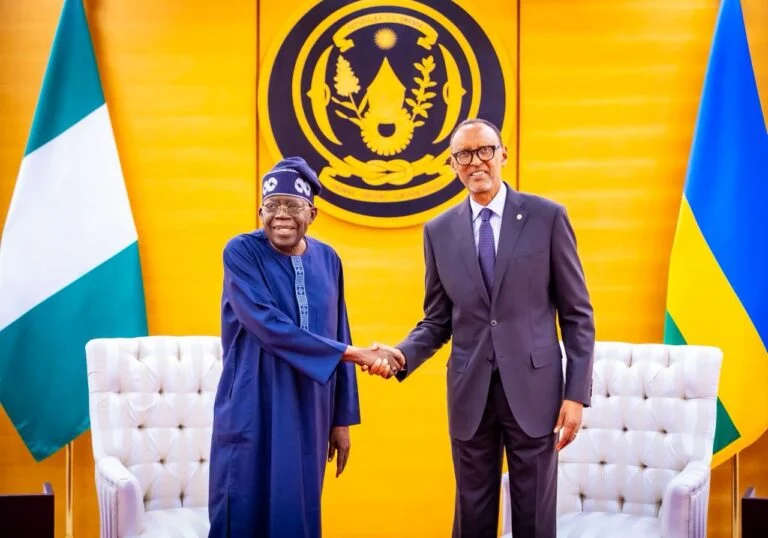
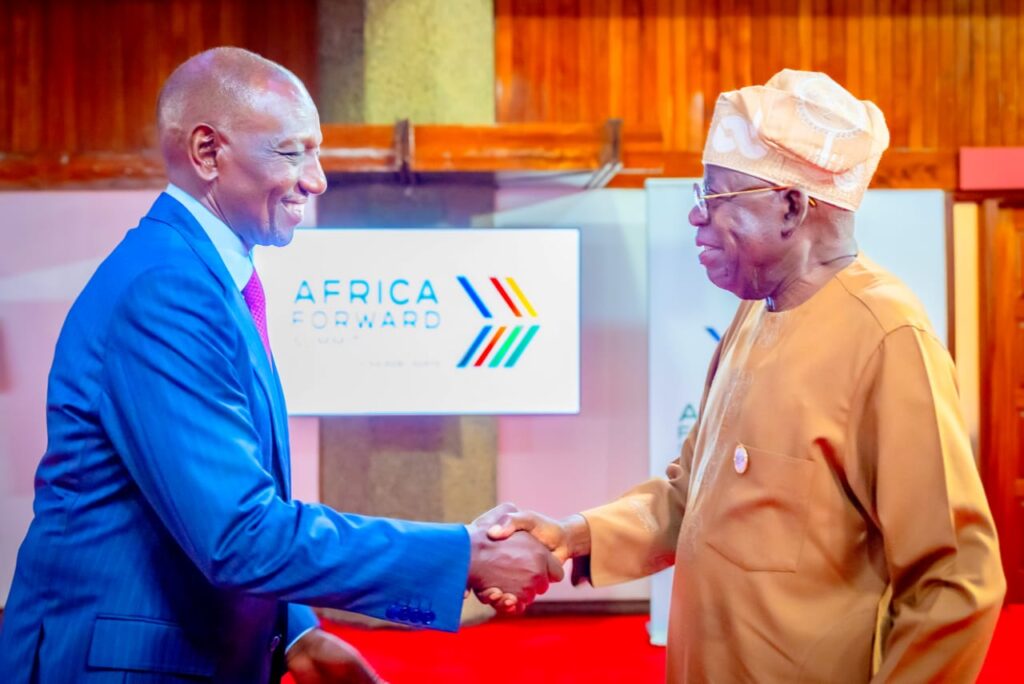
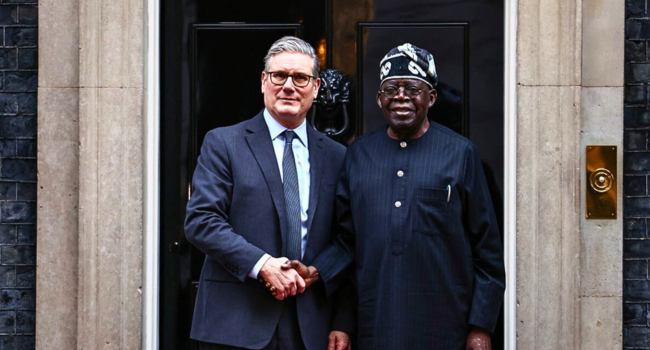
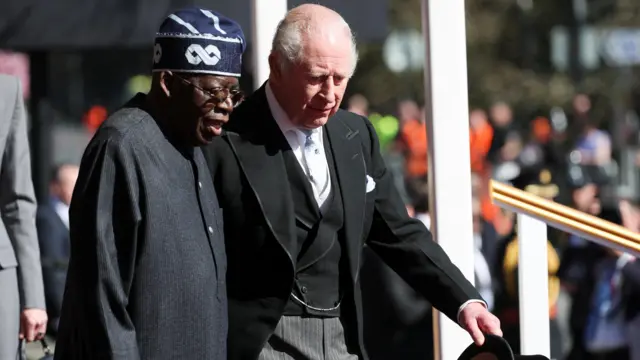
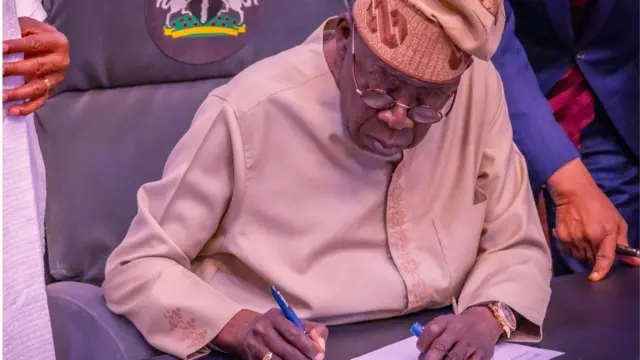
President Bola Tinubu on Tuesday led Nigeria’s delegation to the Africa Forward Summit in Nairobi, Kenya, where he advocated stronger economic integration focused on Africa’s industrialisation and long-term growth.
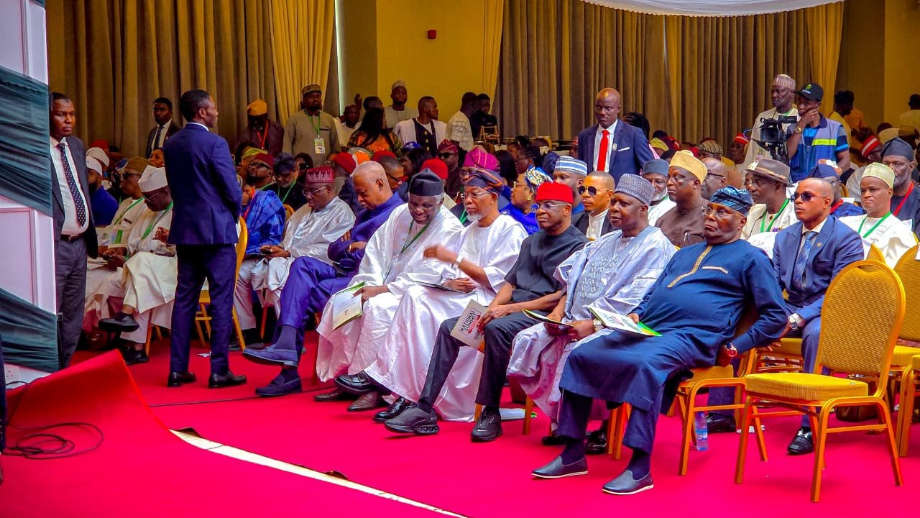
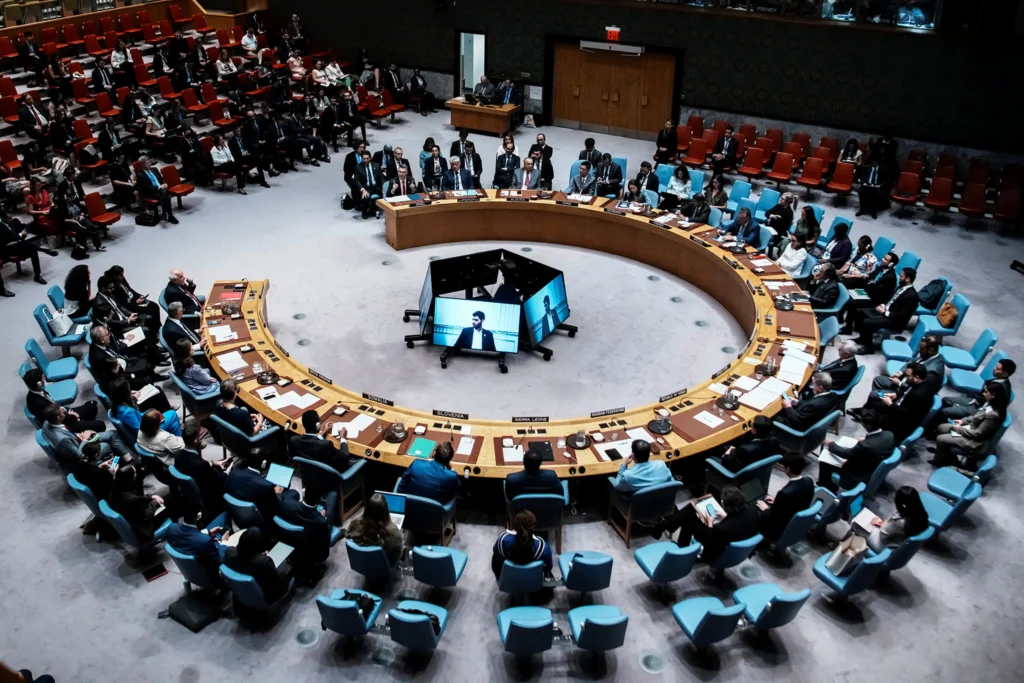
The Africa-France Summit, co-hosted by French President Emmanuel Macron and Kenyan President William Ruto, brought together leaders and senior officials from more than 30 countries to discuss Africa’s economic transformation and development priorities.
This was disclosed in a statement issued by the Presidential Spokesperson, Mr. Bayo Onanuga, on Tuesday in Abuja.
Opening remarks were delivered by United Nations Secretary-General António Guterres and African Union Commission Chairman Mahamoud Ali Youssouf.
At the summit, the French government advocated restructuring economic and political relations with Africa on the basis of equality and fairness, while African leaders emphasised the need for improved access to affordable credit for development financing.
Tinubu highlighted Nigeria’s blue economy potential as a cornerstone of Africa’s development, noting that insecurity and uncertainty had long hindered investment opportunities within the maritime sector and broader ocean-based economic activities.
“Today, I make an explicit commitment: Nigeria will intensify regional coordination by offering our Deep Blue Project’s maritime intelligence infrastructure as a shared data hub for willing Gulf of Guinea states,” Tinubu said.
He stated that interoperable systems, harmonised laws, and seamless joint enforcement must become operational realities.
The President stressed that secure sea lanes, predictable regulations, and functional courts remained essential to unlocking private sector investment in Africa’s maritime economy.
Tinubu added that Nigeria would continue advancing climate-aligned port modernisation and digital transformation within the maritime sector.
He said Africa must move from “sea blindness to ocean sovereignty”, describing the continent’s oceans as a shared heritage requiring collective protection, stronger institutions, robust legal frameworks, regional solidarity, and coordinated maritime security enforcement mechanisms.
On international financial reforms, Tinubu said Nigeria had consistently warned that the current global financial architecture risked becoming irrelevant if it failed to address inequities affecting developing nations, particularly African economies seeking industrial growth and competitiveness.
According to him, Africa’s share of global manufacturing remained below two per cent because the continent continued exporting raw materials while importing processed products. He blamed policy constraints, illicit financial flows, and limited access to affordable industrial financing for the imbalance.
Tinubu said Nigeria had implemented painful but necessary reforms, including the removal of fuel subsidies, exchange-rate unification, and banking recapitalisation exceeding $45.5 billion, aimed at restoring investor confidence and strengthening economic fundamentals.
The President, however, lamented that African economies continued to face punitive borrowing costs, noting that Nigeria would spend about $11.6 billion on debt servicing in 2026, thereby limiting investments in industrialisation and critical development sectors.
“How can an African manufacturer compete with competitors in Europe, Asia, or North America when borrowing costs in Africa are five to 10 times higher?” Tinubu asked during discussions on financing industrial development.
He maintained that Nigeria was not seeking charity, but demanding a fair financial system that would enable African countries to process minerals, refine crude oil, manufacture pharmaceuticals, and compete effectively in global industrial and trade markets.
On migration, Tinubu said African governments and development partners must address root causes by investing in infrastructure, agriculture, digital skills, energy access, and productive sectors capable of creating sustainable employment opportunities for young people.
He urged development partners to dedicate portions of Official Development Assistance to programmes aimed at reducing the desperation driving irregular migration, stressing that people with jobs, security, and hope rarely embark on dangerous migration journeys.
Tinubu also called for stronger African cooperation in building an effective global migration governance framework, supporting the African Union’s Migration Policy Framework and the Khartoum Process while seeking stronger collaboration with global migration institutions.
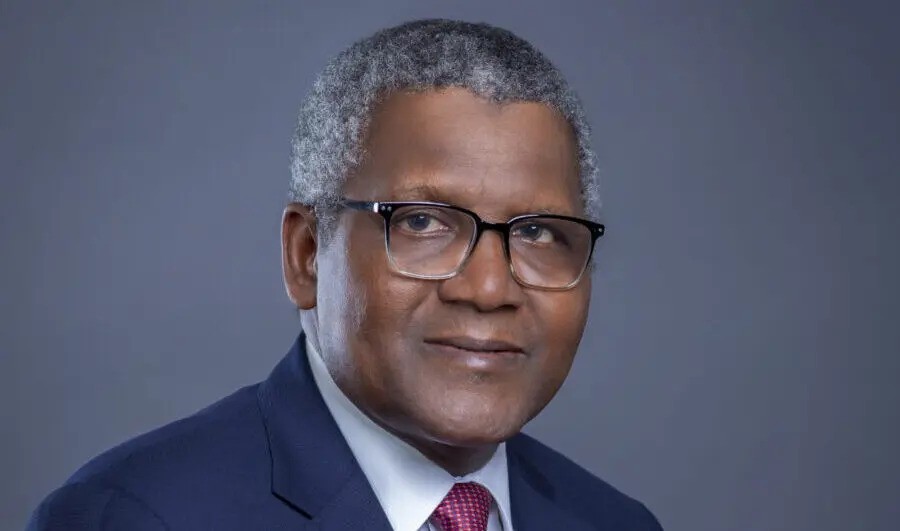
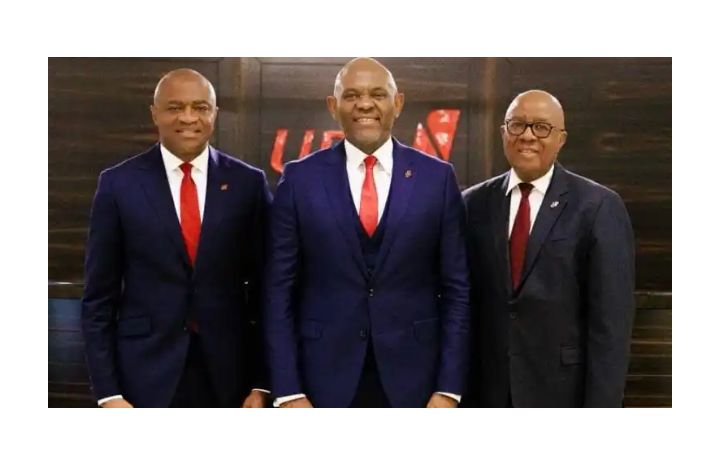
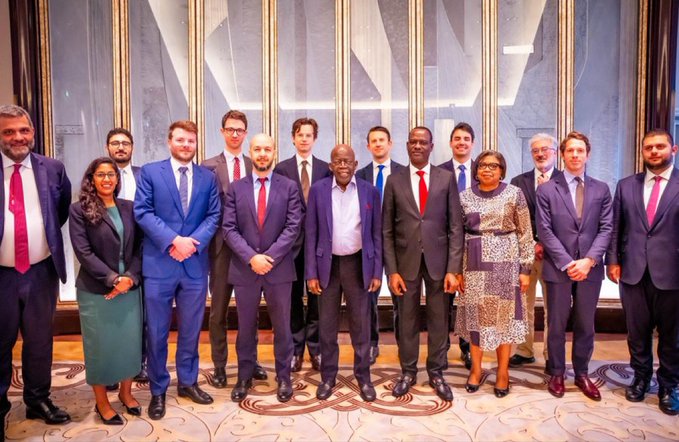
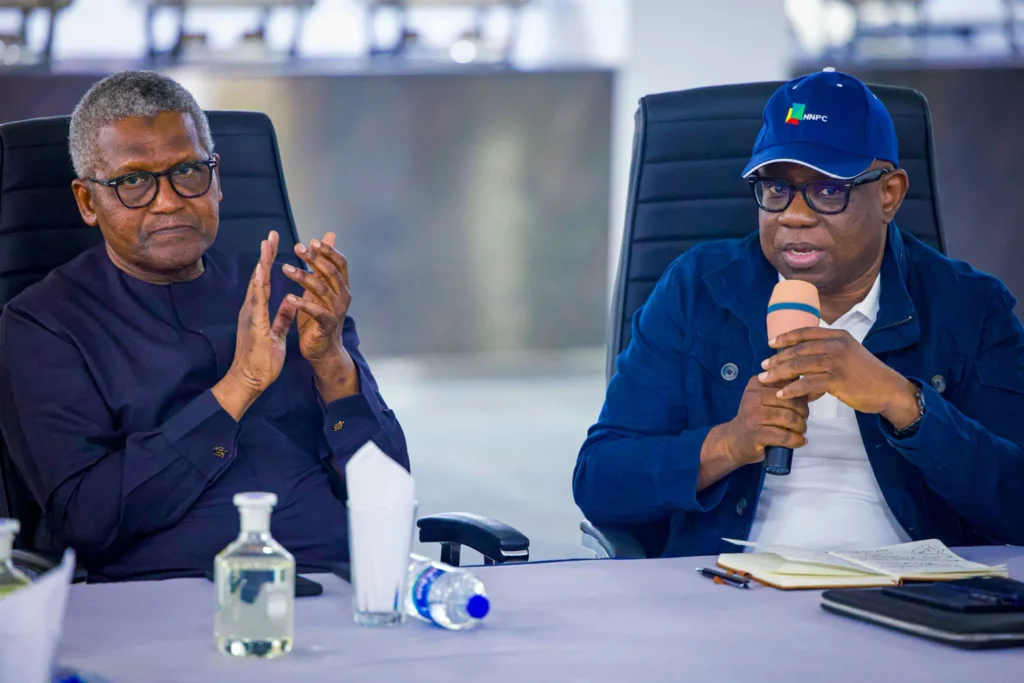
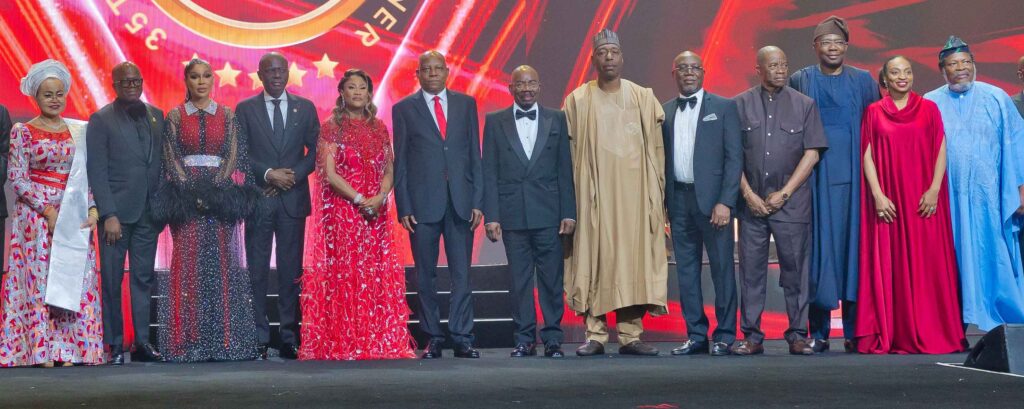
The President was accompanied by ministers, senior government officials, and leading Nigerian business executives, including Aliko Dangote, Abdul Samad Rabiu, Tony Elumelu, and Aigboje Aig-Imoukhuede.
Ministers also held bilateral meetings and participated in summit plenaries.