





























































































































































































































































































































































































































































































































Obi, Civil Groups Protest at National Assembly, Pressure Senate for Real-Time Election Results


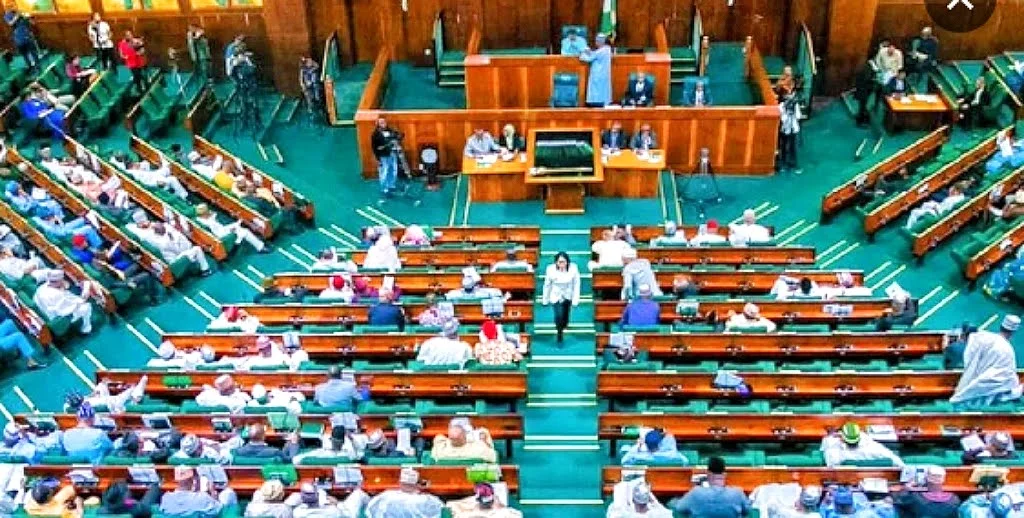
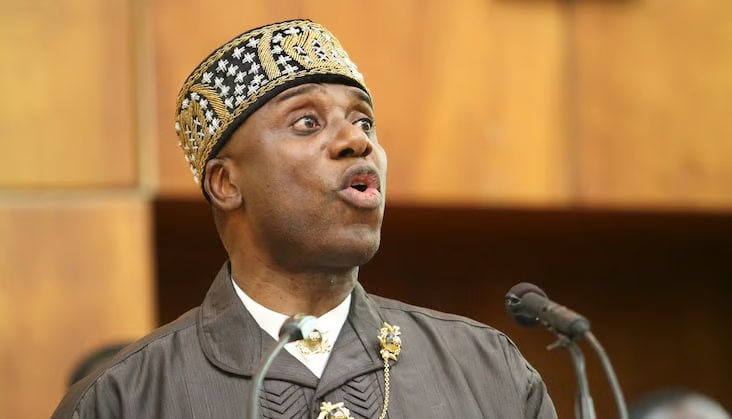
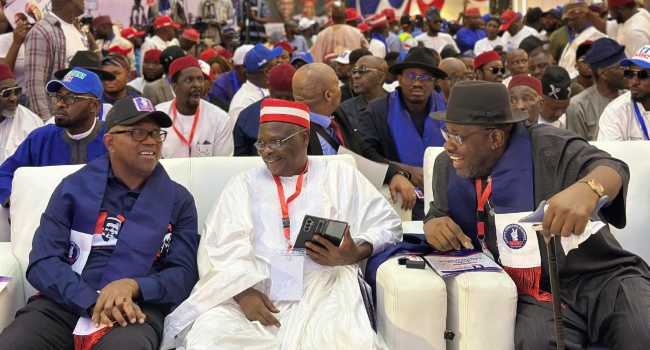
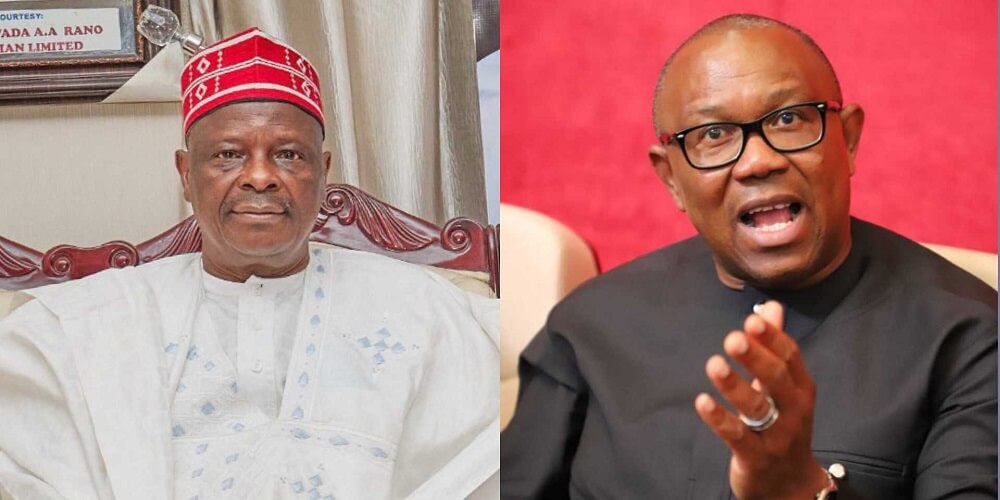
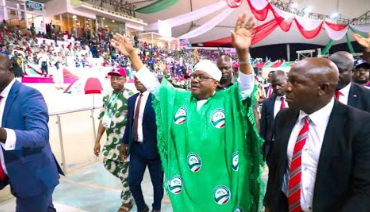
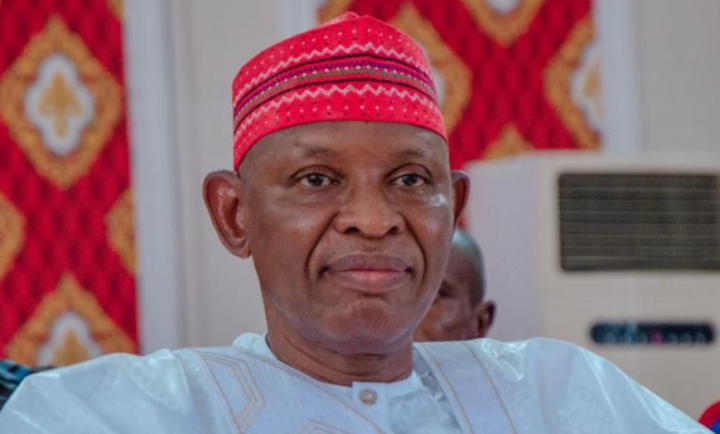
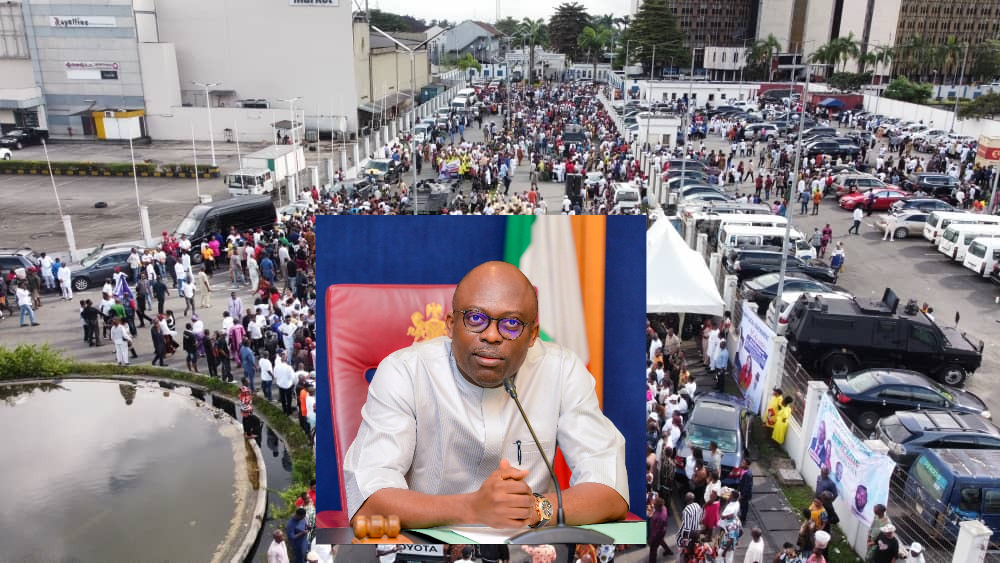
Peter Obi, a leading presidential hopeful for the 2027 elections, on Monday led protesters to the National Assembly in Abuja to demand the inclusion of real-time electronic transmission of election results in the Electoral Act amendment currently before lawmakers.
The former Anambra State governor arrived at the entrance of the parliamentary complex alongside scores of supporters, including prominent activist Ms. Aisha Yesufu, as demonstrators gathered under the banner of the “Occupy National Assembly” protest.
Addressing the crowd, Obi said Nigerians were tired of electoral irregularities and urged lawmakers to allow a transparent process that reflects the will of the people.
“We have suffered the danger. We don’t want any glitch again. We want things to go well. Allow the elections to go through the normal process. Whoever wins, we would accept,” he said. “So, why are you bringing this confusion?,” he said.
The protest was organised against the backdrop of the Senate’s position on electronic transmission of election results in the ongoing amendment of the Electoral Act ahead of the 2027 general elections. Demonstrators insisted that lawmakers must go beyond general provisions by explicitly mandating “real-time electronic transmission” of results from polling units.
Members of civil society organisations, a handful of opposition African Democratic Congress (ADC) members, and several women’s groups converged on the National Assembly entrance to participate in the protest.
Security was tight at the scene, with personnel drawn from the Nigeria Police Force, the Nigerian Army, and the Nigeria Security and Civil Defence Corps. Security operatives barricaded the entrance to the National Assembly, deploying vans and stationing officers at strategic locations to ensure order.
Some representatives of civil society groups told Channels Television that the protesters had no intention of entering the National Assembly premises, explaining that the demonstration was designed to take place mainly at the entrance.
Earlier, the protesters had commenced their march from the Federal Secretariat, proceeding towards the National Assembly gate.
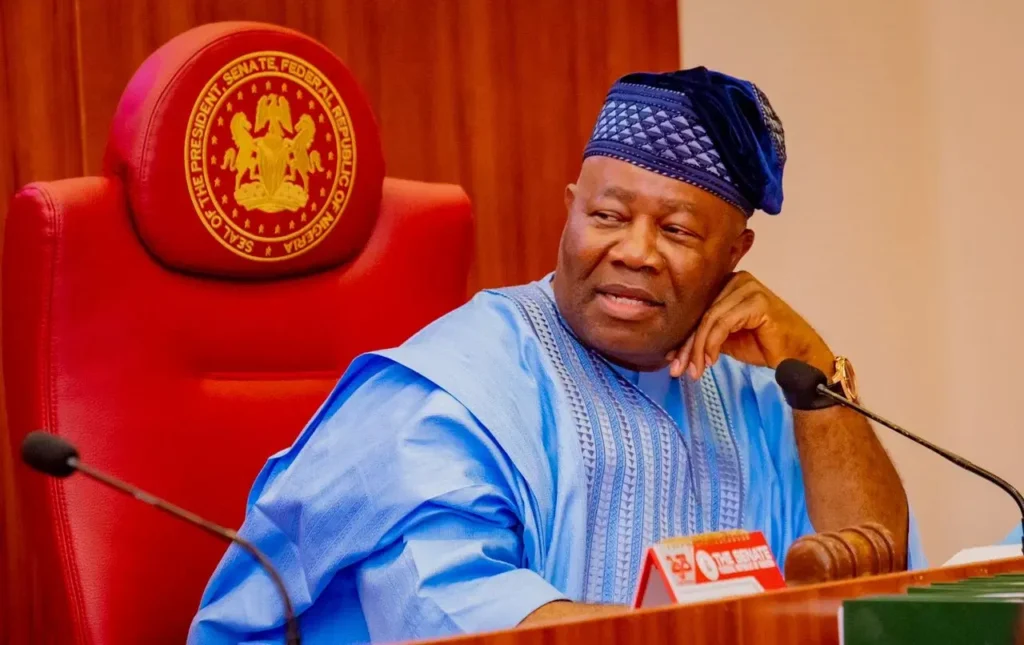
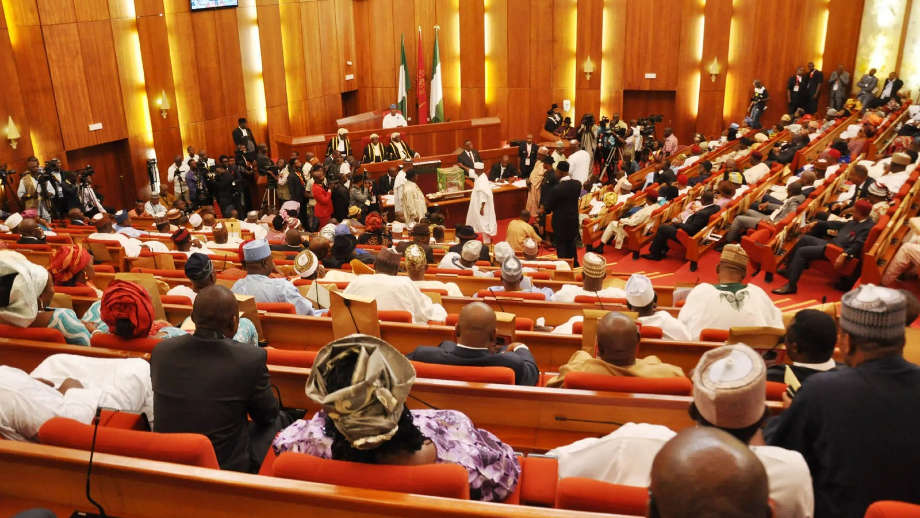
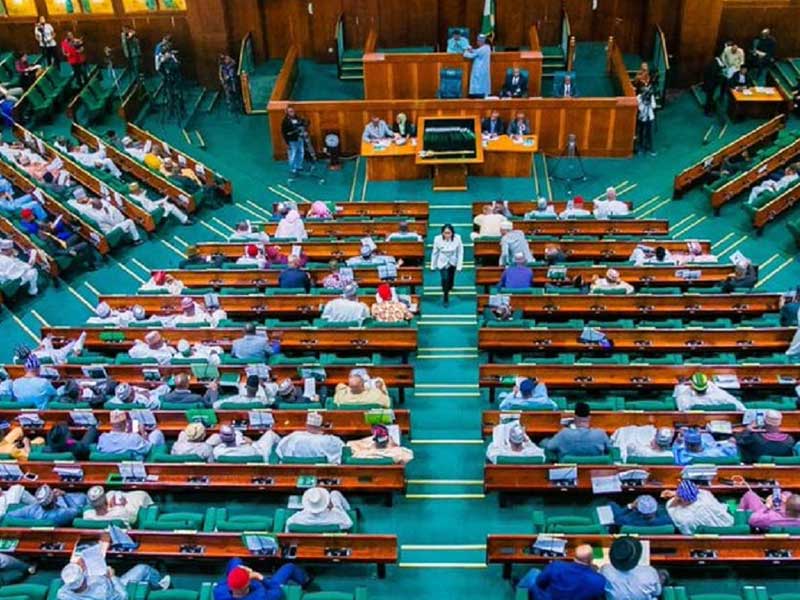
Controversy has continued to trail the amendment of the Electoral Act following the Senate’s passage last week of the Electoral Act 2022 (Repeal and Reenactment) Amendment Bill 2026 through its third reading.
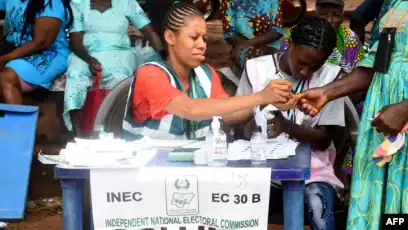
Although the Senate has issued several clarifications denying reports that it rejected electronic transmission of election results, critics argue that the absence of explicit language leaves room for discretion by the Independent National Electoral Commission (INEC).
In passing the bill, the upper chamber declined to approve a proposed amendment to Clause 60, Subsection 3, which sought to make the electronic transmission of election results mandatory.
The rejected provision would have required presiding officers of INEC to electronically transmit results from each polling unit to the INEC Result Viewing (IREV) portal in real time, after the prescribed Form EC&A had been signed and stamped by the presiding officer and countersigned by candidates.
Daily Trust reports that while many Nigerians have called on lawmakers to make real-time electronic transmission compulsory to enhance transparency and credibility, some legislators maintain that the decision should remain discretionary.