












































































































































































































































































































































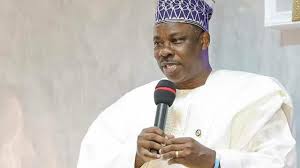





Turning the Corner? Tinubu Says Nigeria’s Hardest Days Are Over


President Bola Ahmed Tinubu has affirmed that the economic reforms implemented over the past two years are delivering tangible results, declaring that Nigeria’s most difficult days are now in the past.
In a nationwide broadcast on Thursday morning to mark his second year in office, Tinubu dismissed concerns about declining crude oil prices—currently around $58 per barrel compared to the budget benchmark of $75—assuring citizens that Nigeria remains on track to meet its 2025 fiscal targets.
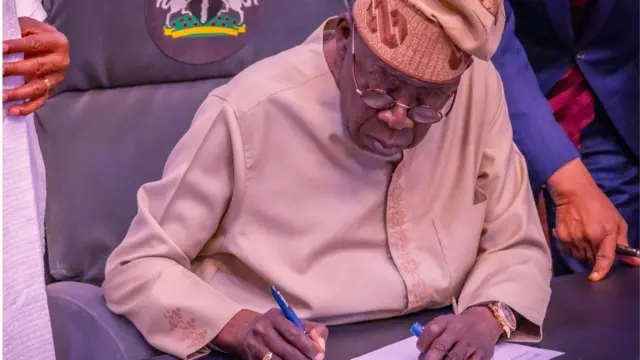
To commemorate his administration’s second anniversary, the President announced a zero per cent Value Added Tax (VAT) rate on essential items such as food, education, healthcare, and rent, in a move aimed at easing the tax burden on households.
Since assuming office in May 2023, Tinubu has introduced sweeping economic reforms which, though often described as painful, are widely seen as necessary.
He acknowledged the hardships many Nigerians have endured as a result of these measures, but insisted they were vital to avoid a looming fiscal crisis—one that could have triggered runaway inflation, a default on external debt, fuel shortages, a collapsing naira, and overall economic instability.
“While the cost of living has risen, undeniable progress has been made,” Tinubu said, noting that inflation is beginning to ease, with prices of rice and other staples showing signs of decline.
According to the President, the oil and gas sector is rebounding, with rig counts in 2025 up by over 400 per cent compared to 2021, and over $8 billion in new investments committed. He said these improvements have helped stabilise the economy, better positioning the country for sustained growth and resilience against global shocks.
He emphasised that Nigeria is on course to meet its 2025 fiscal goals, with gross earnings per barrel of crude oil closely aligning with projections. The country’s fiscal deficit, he added, has narrowed significantly—from 5.4 per cent of GDP in 2023 to 3.0 per cent in 2024.
Reflecting on the state of the economy he inherited, Tinubu said it required bold redirection and difficult decisions, notably the removal of decades-long fuel subsidies and the elimination of the corruption-prone multiple foreign exchange windows.
“It became evident that for all tiers of government to remain viable and deliver on their responsibilities, these outdated systems had to be dismantled,” he said.
“Today, I proudly affirm that our economic reforms are working. We are on the path to building a stronger, more stable nation. By the grace of God, we are confident that the worst is behind us.”
He expressed gratitude to Nigerians for their continued support and belief in the administration’s vision, noting that the May 29 milestone offers an opportunity to reflect on the country’s progress along its socio-economic development path.
Tinubu reported improved government revenue and greater financial transparency, stating that over N6 trillion was generated in the first quarter of 2025 alone. He highlighted the discontinuation of ‘Ways and Means’ financing, which he described as a key driver of high inflation.
He further stated that the Nigerian National Petroleum Company Limited (NNPC), freed from fuel subsidy obligations, is now a net contributor to the Federation Account.
“Our debt profile is improving,” he said. “Although the foreign exchange revaluation temporarily raised the debt-to-GDP ratio to around 53 per cent, our debt service-to-revenue ratio dropped from nearly 100 per cent in 2022 to under 40 per cent in 2024. We have paid off our IMF obligations and grown external reserves nearly fivefold—from $4 billion in 2023 to over $23 billion by the end of 2024.”
The President added that state governments also benefitted from increased revenue, gaining over N6 trillion in 2024. This, he said, has enabled them to reduce debt, pay salaries and pensions promptly, and invest more in critical infrastructure and human capital.
He described the administration’s tax reform agenda as one of its most impactful achievements. The tax-to-GDP ratio, he noted, rose from 10 per cent to 13.5 per cent by the end of 2024—an outcome of targeted policy changes and improved tax administration.
“We are eliminating multiple taxation, making it easier for small businesses to formalise and grow. Low-income households are protected through expanded disposable income, and essential services such as food, education, healthcare, rent, public transport, and renewable energy are now exempt from VAT.”
Tinubu added that the era of arbitrary tax waivers is over, with new, transparent incentives in place to support high-impact sectors such as manufacturing, technology, and agriculture.
“These reforms are not just about revenue – they’re about inclusive economic growth,” he said.
He noted that a more youth-friendly tax environment will support digital jobs and remote work, while export incentives will boost the competitiveness of Nigerian businesses. Additionally, a Tax Ombudsman will soon be established to protect vulnerable taxpayers and ensure accountability in the system.
Most importantly, Tinubu said, Nigeria is laying the groundwork for long-term fiscal sustainability through a new national policy framework. This will shape the country’s approach to fair taxation, prudent borrowing, and disciplined spending.
“These reforms aim to lower living costs, promote economic justice, and build a business-friendly economy that attracts investment and benefits every Nigerian. Together, we are building a system where prosperity is shared and no one is left behind.”
He concluded by noting progress in other sectors, including solid minerals, where a shift from a pit-to-port model to a value-added approach has attracted new investors. In the health sector, over 1,000 Primary Health Centres have been revitalised nationwide, with an additional 5,500 slated for upgrade.